History is witness to the fact that the role of women in the development and development of any nation is not merely supportive but fundamental and decisive. Especially in a Muslim society, where family is considered the unit of society, the role of women plays a key role in forming a stable, cohesive and resilient society.
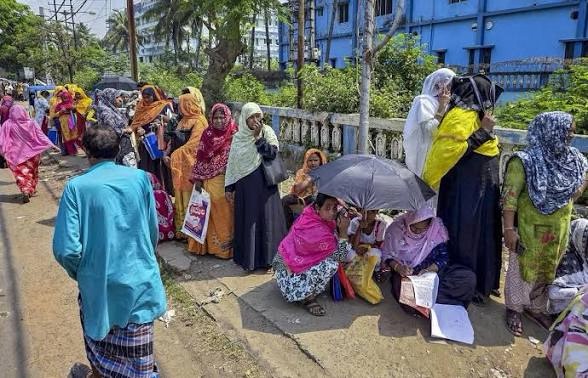
A silent revolution is taking place in the homes, schools, offices and neighborhoods of the country, led by women who rarely seek acknowledgment of their work. Among them, the position of Muslim women holds special importance. Not because they have a loud voice, but because their services have often been carried out under the shadow of dual surveillance: the women present within their community, and the Muslims present in the wider society, which is still learning to see them beyond traditional notions. But when looked at closely, a very different picture emerges, one of perseverance, strength and quiet leadership that held families and communities together through decades of change.
This chain, as it always happens, starts at home. The Muslim mother has long been the first architect of stability, raising her children not just for survival but with an attachment to their religion, their culture and their homeland. Where resources are limited and opportunities difficult, they bear the brunt of economic difficulties, communal tension and social prejudice, and still send their children to school with self-confidence. This is not some passive, background character. This is the hardest kind of leadership, exercised without position or compensation, and it is the foundation on which every other form of social power is built.
As a mother, woman is the first and most important teacher of the society. She inculcates moral values, patience, compassion, and courage to face difficult situations boldly in her children. This home-based training is actually the foundation on which a strong and crisis-resistant economy is built. When a mother raises her children to be responsible citizens, she is actually laying the foundation for social resilience. This same spirit of upbringing has also reached schools in the last few decades. Muslim women teachers, many of whom are the first in their families to complete higher education, have now become, in the literal sense, the protectors of the future of the community. They not only teach arithmetic and language but also self-confidence, especially to girls who might otherwise have been married off at a young age or confined to the house. Today, whenever a Muslim woman stands in front of the blackboard, she is silently rejecting the old adage that modern education and religion cannot go together, and thus, she is opening doors for the coming generations which were closed during the time of their mothers.
Moving beyond schools, Muslim women have gradually entered professions that were once considered closed to them, namely medicine, law, journalism, engineering, administration and business. Their presence in these areas is important for two reasons. It’s solid proof that devotion and professional determination are not at odds with each other, and it provides young girls with the shining examples they need to envision their futures. A doctor who works in the operation theater with a hijab, or a lawyer who fights cases while practicing her religion, does more for the trust of the community than speeches. This professional self-confidence has gradually taken the form of guidance. Muslim women are now stepping up to mentor the youth of their community, organizing study circles, career counseling and skill-building workshops, often on a voluntary basis and after their working hours. She understands perhaps better than anyone the specific issues young Muslims face regarding identity, aspirations and belonging in today’s complex social environment, and she offers guidance in the light of her personal experience, not based on any adopted ideology. This guidance is slowly filling a gap that regulated institutions have so far been slow to fill.
And finally, at the community level, Muslim women are now at the forefront of welfare work, distributing food, health camps, assisting widows and the elderly, and mobilizing resources in times of crisis with a speed and compassion that even formal institutions sometimes cannot match.
These initiatives, often based on self-investment and self-management, reflect a spirit of social caring that has always been present in Muslim women’s circles, but is only now receiving the recognition it deserves.
As nurturing mothers, empowering teachers, encouraging professional women, guiding nurses, and serving welfare workers, Muslim women are not merely participants in the life of the community, but are architects of its stability. And ultimately the strength of a nation depends on the strength of its smallest units. When women lead their communities through hardships with dignity and purpose, they are not just keeping families together, they are quietly building entire nations.
Certainly, when the women of a society are strong, intelligent and active, then no power in the world can stop the progress and happiness of that nation, because a stable family is the foundation of a stable nation.