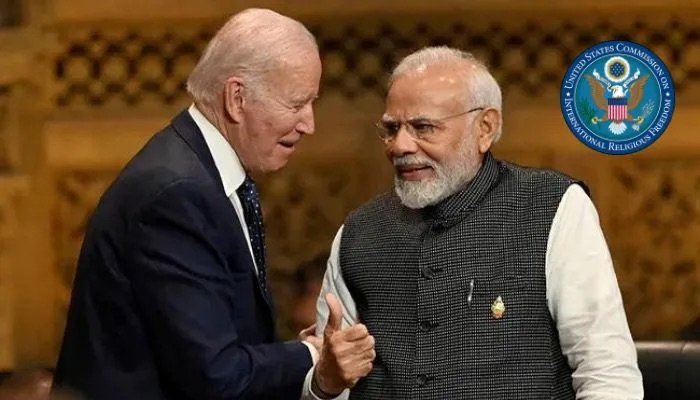


<p>Once again, India finds itself on the receiving end of baseless criticism from the United States Commission on International Religious Freedom (USCIRF). This time, the commission claims that India is becoming a dangerous place for religious minorities, particularly Muslims. But as someone who has lived here and seen the reality on the ground, it&#8217;s hard not to feel frustrated by these outside voices that seem determined to paint a grim picture of our country. The truth is, these reports do more than just create unnecessary noise: they spread fear and mistrust, especially among young Muslims. Instead of working to uplift the community, these so-called &#8220;watchdogs&#8221; push narratives that can tear it apart. How are we supposed to feel about our place in this country when the international media constantly tells us we&#8217;re under attack? The real harm here isn&#8217;t just in these false accusations, but in how they sow division where unity is needed most.</p>


<p>This isn&#8217;t the first time USCIRF has targeted India, and by now, many of us are familiar with its pattern. Every year, they come out with reports that seem to focus only on the negatives, portraying India as a place where minorities live in fear. But what they don&#8217;t talk about are the efforts made to improve the lives of these very communities: programs that help educate, employ, and empower Muslims and other minorities. It&#8217;s almost as if these reports are designed to fit a predetermined agenda, picking up isolated incidents and exaggerating them to make it seem like a nationwide crisis.<br />What makes this worse is how these biased claims reach the young people in our community, especially Muslims, who might start to believe that their country has abandoned them. For young Muslims growing up in India today, reports like these can be incredibly damaging. When you&#8217;re constantly told that you are part of a persecuted minority, it&#8217;s hard not to feel like you don&#8217;t belong. And that&#8217;s exactly what these kinds of narratives do: they create a sense of victimhood that can lead to anger and resentment. USCIRF&#8217;s one-sided story creates unnecessary fear and frustration. And worse, it gives<br />radical voices more ammunition to stir<br />up<br />trouble,<br />turning young,<br />impressionable minds against their own country. The last thing we need is for our youth to be manipulated by outside narratives that have little to do with our day-to-day lives. What frustrates many of us is how these reports completely ignore the progress that&#8217;s being made. In the past few years, the government has rolled out several programs specifically designed to uplift minorities, especially Muslims. There are educational scholarships, skills training for jobs, and efforts to support women and girls from our community.<br />These are the things that are actually changing lives on the ground. Take education as an example. The scholarships and financial aid given to Muslim students are making a real difference, opening doors to opportunities that were once out of reach. These initiatives are helping bridge the gap,<br />empowering our youth to succeed. Yet, none of this finds mention in the narrative USCIRF pushes. Instead, they focus on isolated incidents of violence or tension, failing to see the bigger picture of how minorities, including Muslims, are striving and succeeding in today&#8217;s India. It&#8217;s hard not to feel like there&#8217;s a political angle at play here. By constantly criticizing India and claiming religious minorities are under attack, they are feeding into a narrative that serves certain international agendas. But for those of us living in India, we see through this. These divisive reports don&#8217;t reflect our day-to-day reality. Yes, there are challenges, but the constant doom and gloom narrative only serves to stir unrest.</p>


<p>India has always been a country where different faiths and cultures coexist and we cannot let skewed narratives break that bond. It&#8217;s up to us to ensure that our Muslim youth grow up feeling confident in their place in this country, knowing that they are valued and respected. We need to talk about the opportunities that exist and push back against the misinformation that tries to tear us apart. As a young Muslim girl growing freely in India, it&#8217;s frustrating to see how USCIRF&#8217;s reports misrepresent India. It&#8217;s time we focus on building bridges within, empowering young people with the tools they need to succeed, and ensuring that all communities, especially<br />Muslims, feel a strong sense of belonging. The future of India lies in unity, not in the divisive rhetoric being peddled by organizations that don&#8217;t truly understand our reality.</p>


<p>-Insha Warsi<br>Francophone and Journalism Studies<br>Jamia Millia Islamia</p>

USCIRF’s Misleading Reports: A Threat to National Integrity