
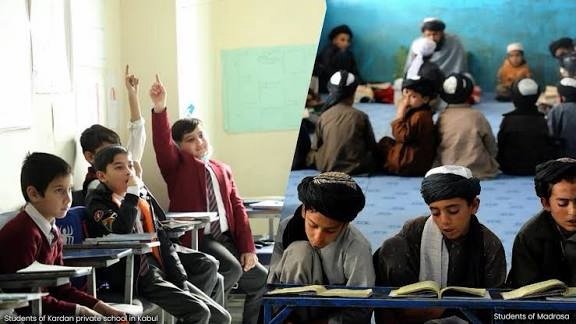
Madrasas stand as enduring pillars of faith and learning for Muslim communities in India. These institutions have grown from centuries of Islamic learning and have always offered more than religious teaching.
They give people a sense of identity and help them stay strong during social and
economic difficulties. Madrasas have been sites of contestation in India and other developing countries like Indonesia and Malaysia. Across these countries, madrasas often face strong criticism When eyes radia le canent bans, whilatiers aate critical try recommend modernisation to streamline talent and improve compatibility with contemporary educational standards. Madrasa students often struggle to secure jobs in non-religious fields such as the private sector, higher education, and production industries.
Indian madrasas, in collaboration with the government, could adopt a modernised curriculum to enhance national security and instil a sense of responsibility in students to counter both external and internal narratives of division and extremism. Madrasa modernisation is not a threat to tradition but a necessary step toward empowerment. By weaving modern education into religious studies, madrasas can equip Indian Muslim youth with critical thinking skills that resist extremist influence and encourage meaningful contributions to national progress. Community-led reforms and cooperation with the government and civil society can form the foundation for this approach.
Madrasas have long served as sanctuaries for millions of Muslim children, particularly from low-income families, offering free education where mainstream options often fall short. According to the Ministry of Minority Affairs, there are approximately 38,000 madrasas in India, of which around 28,107 are officially recognised. More than two million students are enrolled in these institutions, making them crucial contributors to India’s literacy landscape. While they preserve traditional Islamic pedagogy, the traditional curriculum focuses heavily on religious sciences and pays limited attention to contemporary educational needs. This leaves graduates underprepared for a job market that demands skills in science, technology, and analytical reasoning. This gap,
highlighted by the Sachar Committee in 2006, reflects broader educational disadvantages within the Muslim community, whose enrolment rates lag behind national averages. The unemployment rate for Muslim youth is 18 percent, compared to the national average of 12 percent. Modernisation will not diminish the traditional significance of madrasas; rather, it will improve the quality and relevance of madrasa education. It will support behavioural change among students, enabling them to counter misleading narratives while building a strong sense of identity and resilience.
Madrasa modernisation that introduces secular subjects such as political science, public policy, sociology, national security issues, and information technology alongside Quranic studies would produce well-informed learners. Such subjects foster critical thinking-a key defence against manipulative propaganda. A student who can debate philosophy from Aristotle to Al-Ghazali or develop apps that address community issues gains exposure that breaks down echo chambers of hate and builds empathy across faiths.
Modernised madrasas can link education to employability through vocational courses in IT and entrepreneurship, offering pathways to stable jobs and reducing unemployment. This could help lower the high dropout rate among Muslim students. Integrating madrasas with the State Board could also give students a platform to aspire to civil services. Modern curricula could incorporate pluralistic history and the Indian Knowledge System, including Sanskrit, Hinduism, Christianity, Marxism, and Figh. This approach mirrors the Prophet’s emphasis on seeking knowledge “even if it is in China,” encouraging Indian Muslims to view modernisation as an Islamic obligation. Aligning madrasas with the National Institute of Open Schooling (NIOS) is another step toward easing transitions to higher education.
Parental involvement through awareness campaigns can sustain progress, while scholarships such as Post-Matric Aid help overcome financial constraints. Madrasa modernisation is a policy approach that addresses multiple challenges at once. It can eliminate suspicion by strengthening mental capabilities, improving economic prospects, and fostering an intellectually confident Muslim class that carries Islam’s compassion into India’s democratic fabric. Contrary to the usual fears, modernisation does not dilute Islamic learning. If anything, it strengthens it. Islam’s intellectual history is rooted in reasoning, debate, and inquiry.
From Al-Ghazali to Ibn Rushd, Islamic scholarship has always embraced knowledge in all its forms. When madrasas teach science, philosophy, or technology alongside Quranic studies, they revive that tradition. A confident student with a strong moral foundation and a modern education is the worst nightmare for extremists. Madrasa modernisation is not about policing a community. It is about preventing vulnerable youth from becoming targets of manipulation. It strengthens national security, expands opportunities, and builds a Muslim citizenry that engages confidently with India’s democratic framework.