

<p>Grassroots democracy determines the dynamics of power politics in agrarian societies like India, and women&#8217;s participation is a strong determinant. It is where the heart and soul of Indian democracy lie.<br>Political scientists believe that the party or leader most connected to India&#8217;s local structures has the best chance of controlling power at the center. Women-as voters, campaigners, or candidates-form an intrinsic part of electoral processes, particularly in local-level elections.</p>


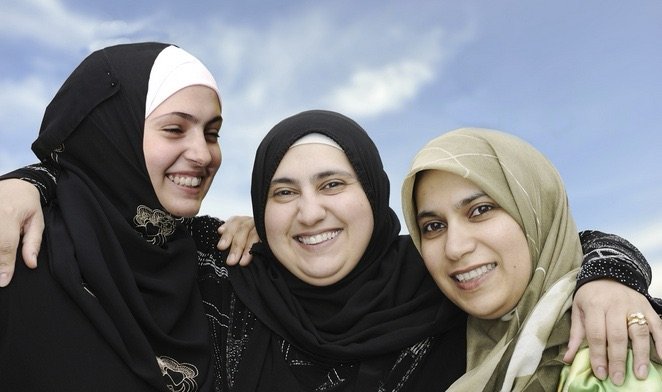
<p>The last 15 years stand as testament to this. Its outreach to village-level party workers, especially women, through induction programs, communication channels, and cooperative leadership, has become a blueprint for future political strategies. This approach is now common across state and national parties. Such connectivity builds the image of parties as caretakers of the people, legitimizing their hold on power. A central element of this connectivity is the open electoral space that enables women to contest local elections and rise from grassroots to positions of influence. Muslim women, in particular, are utilizing this political space to reshape governance by prioritizing community issues over ideological or communal divides. Many join parties or contest independently, steering the political narrative to change the community&#8217;s image.</p>


<p>The Government, through welfare schemes like Ujjwala Yojana, Garib Kalyan, Krishi Sinchai Yojana, Atal Pension Yojana, Jan Dhan Yojana, Nari Shakti Puraskar Scheme, and Swayamsiddha Scheme, has created pathways for Muslim women to participate in decision-making, including electoral politics. These initiatives have boosted the electoral performance, reflecting how grassroots politics shapes a party&#8217;s real vote base. In recent years, the current government has invested considerable energy in making grassroots politics more inclusive by reaching out to minorities. The Pasmanda outreach and the Muslim women&#8217;s vote base are prime examples, providing opportunities for Muslim women to access institutions and influence governance. This article examines how Muslim women, through local elections and government initiatives, are reshaping governance at the grassroots.</p>


<p>The 2023 urban local elections in Uttar Pradesh highlighted this trend. Political parties fielded more Muslim candidates than before. Of these, 61 emerged victorious, attributed to outreach among Pasmanda groups and women voters. In Saharanpur&#8217;s Chilkana Nagar Panchayat, Phul Bano won the chairperson&#8217;s post-one of several Muslim women now presiding over local boards in western UP. The pattern is uneven and highly localized, but the presence is real and growing. Their priorities are also clear: women leaders tend to invest more in public goods such as drinking water, sanitation, roads, and anganwadis. Studies indicate that Muslim women-led panchayats place particular emphasis on sanitation, especially for female-headed households.</p>


<p>Bihar provides another intriguing case. Women constitute a majority of panchayat representatives, and recent elections showed Muslim women, despite facing steeper challenges in nominations and campaigning are leveraging networks and self-help groups for electoral success. The state&#8217;s already high baseline of women&#8217;s representation makes Muslim women&#8217;s gains especially visible. In Assam, particularly in the lower and southern districts, many Muslim women contested panchayat elections without party symbols, relying on family networks for recognition and support. This marks a significant shift, as housewives with limited public exposure are stepping into electoral politics. In the &#8220;char&#8221; areas, many first-time women candidates contested and won, crediting their victory to the support of Muslim women voters. Kerala&#8217;s Kudumbashree, one of the world&#8217;s largest women&#8217;s collectives, has also become a launchpad for political participation. In the 2020 local elections, 16,965 members contested, and 7,071 won; roughly one-third of all local representatives were Kudumbashree members. In Muslim-majority Malappuram, where Muslims comprise 70% of the population, women&#8217;s representation in local bodies, ward offices, and neighbourhood groups has become the norm-providing a platform for first-generation entrants from conservative households.</p>


<p>Under the Rashtriya Gram Swaraj Abhiyan, the Centre funds leadership and thematic modules for elected women representatives. On<br />8 March 2025, Special Gram Sabhas were held to promote &#8220;Women-Friendly Gram Panchayats.&#8221; The Ministry of Panchayati Raj, in partnership with UNFPA, has developed training content and master trainers. The government has also issued guidelines for states to institutionalize Mahila Sabhas—women-only meetings—to allow women to articulate collective demands. Muslim women are increasingly using such platforms to express themselves, gain empowerment, and emerge as curators of their future.</p>


<p>This evidence shows that the entry of Muslim women into local institutions is a substantive shift in India&#8217;s grassroots politics, not a symbolic accommodation. Enabled by reservations, party outreach, and new platforms under Panchayati Raj, these women are converting participation into tangible public benefits. If sustained, this institutional support will empower women, transform the local landscape, and embolden India&#8217;s grassroots democracy as a global example.</p>


<p>Altaf Mir, PhD<br>Jamia Millia Islamia</p>

Grassroots and Grace: Muslim women reshaping local governance