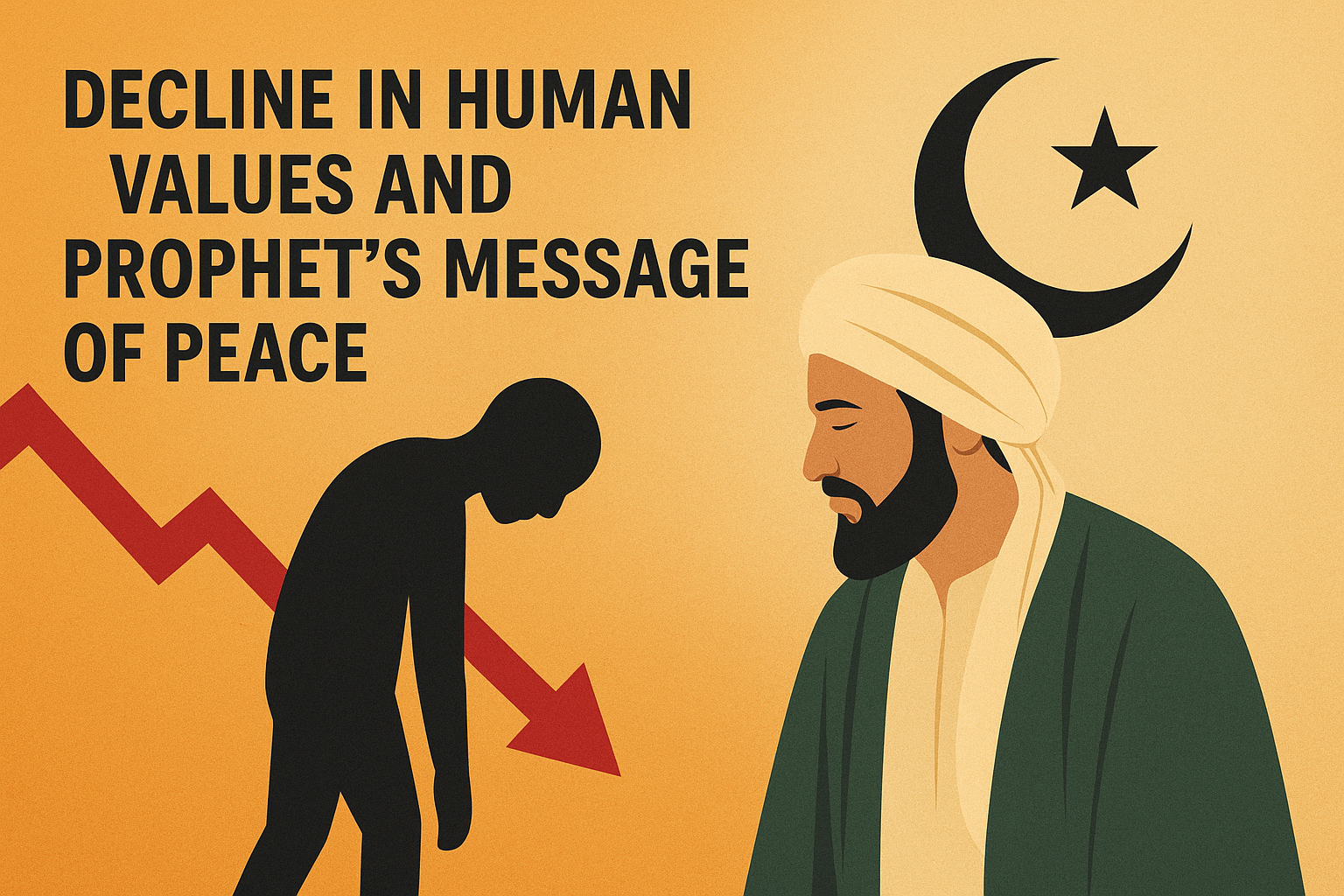
In an era of rapid technological advancement and material progress, the world is ironically witnessing a sharp decline in core human values.
Compassion is overshadowed by selfish gain, truth is diluted by misinformation, and the sanctity of life is compromised in the name of power. From the rise of hate crimes, exploitation, and war to growing individualism and moral apathy, humanity seems to be losing its moral compass. This global decay of values demands not just criticism but a collective response rooted in action, integrity, and guidance. For Muslims, the responsibility is both heavy and clear: to revive and uphold the timeless teachings of Prophet Muhammad (PBUH), whose life was the greatest embodiment of peace, justice, mercy, and human dignity.
Prophet Muhammad (PBUH) was not just a religious leader; he was a reformer, a statesman, a family man, and above all, a mercy to all creation. The Qur’an itself declares: “And We have not sent you, IO Muhammad], except as a mercy to the worlds.” (Qur’an 21:107). His message was universal, rooted in the elevation of human character. He taught honesty in trade, compassion in leadership, patience in hardship, forgiveness in power and honoured the rights of all-Muslim or non-Muslim, rich or poor.
The decline in human values today is reflected in rising injustice, corruption, family disintegration, and moral confusion. Empathy is being replaced by indifference. Truth is often compromised for gain. Social media encourages self-image over self-improvement. Even sacred institutions have been stained by greed and hypocrisy. This is not merely a social issue; it is a spiritual crisis. Without strong values rooted in faith and purpose, humanity risks descending into chaos. In this darkness, the life and legacy of the Prophet (PBUH) shines as a beacon for all who seek light. Muslims are not just followers of Islam; they are carriers of its light.
In a time of rising ignorance and hostility, their role is to represent Islam not just in words, but in character and conduct. The Prophet (PBUH) said:
“I was sent only to perfect good character.” (Musnad Ahmad) and now his mission rests with the Ummah. Upholding honesty in business, kindness in relationships, fairness in judgment, and truth in speech-all are forms of dawah. Even a smile, as the Prophet taught, is charity. Muslims must lead by example in their communities, standing against racism, injustice, and inequality while promoting harmony, service, and respect for all. They must teach their children the values of humility, patience, gratitude, and sincerity, not just through books, but through daily actions.
The Prophet (PBUH) did not conquer hearts through force, but through flawless character. His message reached the world through trustworthiness, compassion, and tireless efforts for peace and justice. To revive this legacy, Muslims must reconnect with the Quran, study the Seerah, and reflect prophetic values in every sphere like education, media, politics, and family life. Muslims must also stand united, not just in rituals, but in purpose; to be ambassadors of peace and humanity. In doing so, they fulfil their duty as the followers of his teachings and offer the world what it desperately needs: a return to truth, dignity, and divine mercy.
The decline of human values is not inevitable; it can be reversed through sincere faith and action. Our beloved Prophet Muhammad (PBUH) left behind a living example for all time. It is now the duty of Muslims to uphold his message, not just by preaching, but by living it. In doing so, they can be the source of light in a world longing for hope.
-Insha Warsi
Francophone and Journalism Studies, Jamia Millia Is/amia.